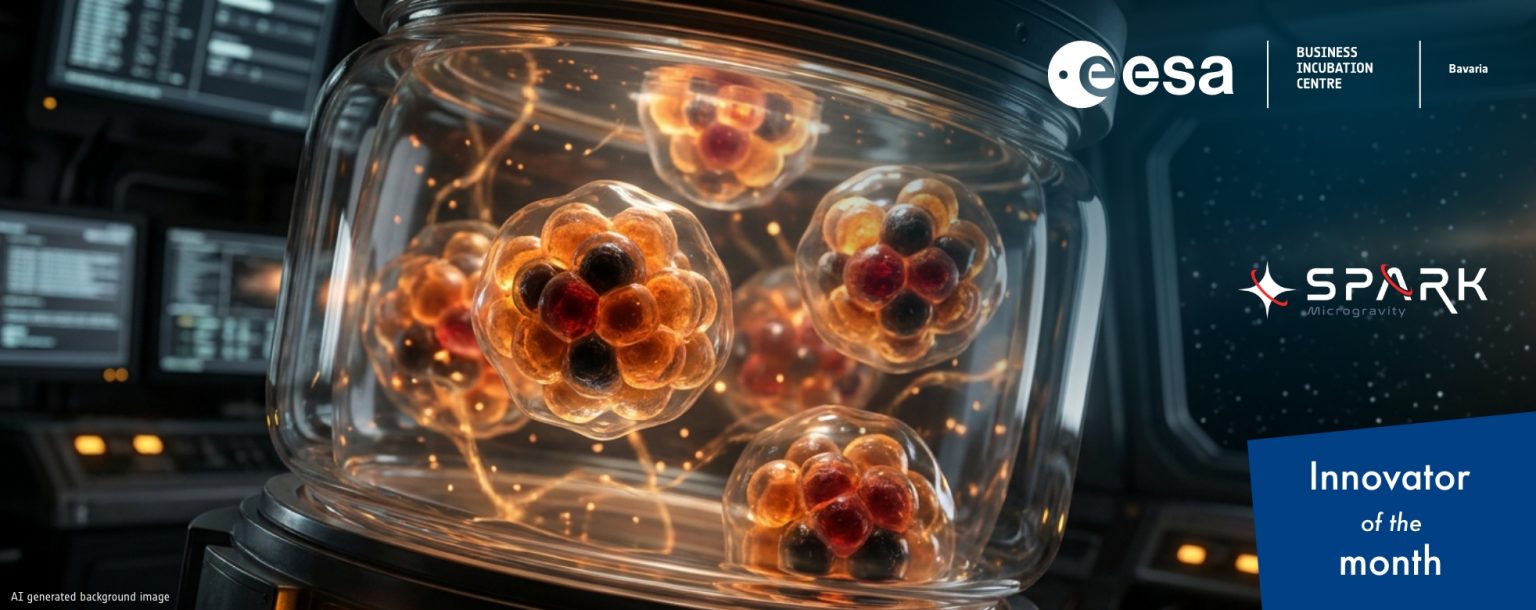
Many people think “space biology” is fascinating, but distant. If we open the door and look inside, what exactly are you building at SPARK Microgravity, what does your team do differently, and why should a serious R&D leader believe it can be operational, repeatable, and useful?
Allison: On Earth, gravity is an active variable that shapes cell behavior and fluid physics. In conventional wet-lab experiments, cells can sediment, and fluids can circulate via buoyancy-driven convection, which can blur what you are trying to observe. In microgravity, those gravity-related effects are greatly reduced, which can make diffusion and intrinsic biological organization more decipherable. Microgravity does not “fix” biology, but it can remove a constant, often unacknowledged force from the system, and that can sharpen the signal our customers are trying to interpret.
That is the foundation of SPARK Microgravity. We build modular, autonomous orbital biolabs for cancer and pharmaceutical R&D. The point is not to run a single experiment once. The point is to make microgravity experiments repeatable across missions, with standardized fluid handling, controlled environments, and consistent data capture, so that a science team can iterate with real comparability. We are building an instrument layer for space biology that is designed to be a preclinical instrument. Our motto is SPARK labs in space, cures on Earth. Our vision is to help the world understand cancer more clearly, and treat cancer patients more precisely. We want to cure cancer from space. Welcome to SPARK Microgravity.
Katharina: What most people often underestimate is that science only changes medicine when it becomes operational. A brilliant biology experiment that cannot be run reliably, safely, and repeatedly is not an R&D tool. Space-based research has historically been powerful, but operationally constrained, and that is not a criticism, it is physics, safety, crew time, and complexity. Multiple authoritative reviews and our own user research focus group assessments have long noted that crew time is limited and that automation and ground-based control are essential if you want to use orbital platforms efficiently.
So, we built SPARK as a full system. Yes, the hardware matters. The service layer matters just as much, meaning planning, biosafety, integration, flight operations, return, and delivering data in a format that a pharmaceutical team can actually use.
Allison and I are complementary by design. Allison carries the long arc and plays in calculated risks. She thinks in systems, hardware architecture, service design, and scientific constraints. The thing about Allison is that she can see five to ten years ahead with unusual clarity. My role is to make that future executable. I translate vision into operating engine, strategic partnerships, financing strategy, and the cross-border structure that lets a technically ambitious platform scale in different regulations without compromising safety, quality, or timelines. In other words, Allison turns impossible into direction, and I turn direction into delivery, with the governance that makes outcomes repeatable.
We are two cofounders focused on building an orbital cancer lab to find cures for cancer, and we’re proud to be a female-led team.
What motivated you to start SPARK Microgravity, and what is fundamentally different about your approach compared with legacy pathways tied to the International Space Station and agency-driven access models?
Allison: SPARK Microgravity started as my academic research project in London, where I mapped the microgravity ecosystem through extensive interviews with researchers who had flown experiments to the ISS, and researchers who never got access, were denied applications, or lacked funding. There were a few patterns that emerged. Space can reveal biology in ways that are difficult to reproduce on Earth, but the execution pathway has too often been customized, slow, and low-iteration relative to pharmaceutical R&D cycles. We started SPARK Microgravity because we could not accept the mismatch between what microgravity can teach us and how hard it still is to use.
That friction matters most in oncology, where the development reality is regimented. Large-scale analyses show oncology has among the lowest probabilities of approval from clinical entry, and across drug development the leading reason programs fail is still lack of efficacy. When models are insufficiently predictive, you learn the truth late and late truth is expensive. That is why we are obsessed with earlier biological signal quality.
So we build from what our customers need, which are repeatable experiments, predictable integration, and outputs they can use to make high-stakes decisions. Our aim is to make microgravity accessible and repeatable enough to fit real R&D timelines because every cycle we accelerate, and every dead end we avoid earlier, is time we give back to cancer patients who need better treatments.
Katharina: What differentiates SPARK Microgravity is that we design for repeatability, usability, biosafety, and decision-grade outputs from day one. We are building orbital biology infrastructure that is autonomous by design because the sector has openly acknowledged what the physics and the operations demand, as crew time is limited, and scalable research requires automation and ground-driven control.
We do not position ourselves as competitors to the International Space Station or to agencies. We respect the foundations they built and what they proved was possible. But proving microgravity can be useful is not the same as making it operationally useful. Our approach is to reduce dependence on scarce crew time and custom setups through standardized, modular, autonomous biolabs that can run repeatable studies with consistent conditions across missions, and, critically, can ride the emerging commercial LEO marketplace rather than being tethered to a single destination.
Context matters. NASA’s public transition planning targets ISS utilization through 2030 while moving toward commercial destinations, and policymakers are actively debating whether that horizon needs extension. If the ecosystem is evolving, the tooling must evolve too. SPARK Microgravity is built for that future with a standardized instrument-and-service layer that can match the tempo and accountability of professional R&D and help turn microgravity from a remarkable environment into a reliable engine for better treatments on Earth.
Deep-tech companies often hinge on whether early momentum becomes real engineering progress. How did ESA BIC Bavaria come into the picture, and what has it made possible that might not have happened otherwise?
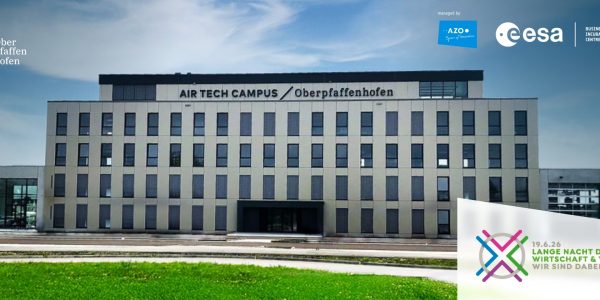
Allison: In deep tech, early institutional support is incredibly important. It is a signal that converts ambition into credibility. ESA BIC Bavaria was our first meaningful institutional backing, and it helped us move from concept to build path with more speed and more confidence. Critically, it reinforced the discipline we needed in evidence, engineering rigor, and a bias toward systems that are built to last. It also signaled to the space ecosystem that what we are building is not a one-off payload, SPARK Microgravity is building infrastructure for space biology.
Katharina: To add on, ESA BIC Bavaria created momentum at the exact stage when we needed it. Beyond funding, it provided market-facing structure with mentoring, introductions, and feedback grounded in aerospace.
What has been your biggest challenge so far?
Allison: The hardest challenge is forcing two worlds to share a standard. Biology is variable because living systems are variable. Aerospace engineering is intolerant of variance because flight systems must behave predictably under stress. SPARK Microgravity’s job is to make those truths coexist inside one platform, our hardware. SPARK Microgravity’s lab is gentle enough for biology, strict enough for spaceflight, and repeatable enough for R&D. That’s the magic SPARK Microgravity makes, and it is a pretty poetic system.
Something to understand is that microgravity also changes fluid behavior. When buoyancy-driven convection and sedimentation are reduced, diffusion and surface forces become more influential, and that shifts what “good experimental design” means. If you do not engineer around that, you can generate artifacts. If you do engineer around it, you can reveal biology that is otherwise difficult to resolve.
This is also why microgravity research is so challenging and fun to work in. Our researchers found microgravity-linked cellular alterations and the formation of three-dimensional spheroids, which can be relevant because multicellular spheroids more closely resemble aspects of in vivo tissue architecture than flat monolayers. SPARK Microgravity is building the infrastructure that lets researchers interrogate those phenomena with comparability and discipline.
Katharina: The other hardest challenge is orchestration. In deep tech, everything arrives urgent. Engineering, biosafety, integration schedules, partnerships, fundraising, and cross-border compliance all compete for first place. Our job is to decide what matters first today without breaking the chain that gets the next mission done.
So we run our company like a mission program. We define owners, milestones, and risk registers, and we make decisions that protect the critical path and protect the team. Governance is incredibly important in our internal work. Governance is what prevents urgency from turning into burnout, and what ensures quality does not erode when timelines tighten.
You are building aerospace-grade biotech infrastructure as two female cofounders in an industry where many rooms still skew male. What has it been like in reality, and what advice would you give to female founders who want to build something technically demanding, capital-intensive, and culturally nontraditional?
Allison: Most days, we are not thinking about being a female-led company. We are thinking about building something that hasn’t been done before, and making our system work in different ways. There are things we have learned along the way being female founders though, so I will share three points of advice from our experience. If you are a woman building deep tech, do not wait for permission to be ambitious.
Advice 1: Find a cofounder who expands your range, not your ego. The cofounder relationship is the highest-leverage decision you make. It sets your speed, your resilience, and your ceiling. Katharina and I are complementary, and that is what makes our partnership powerful. I spend a lot of time in the future, building the product, thinking about scientific implications, and how to execute the service. Katharina makes that future real in the present. She brings the execution backbone of the company with the operating engine, the strategic partnerships, the financing investment and wealth preservation, and the strategic decisions that keep the mission stable when noise gets loud and problems get sharper. Together, we can move fast without becoming fragile. We are direct with each other, we trust each other deeply, and we disagree early, because truth discovered late is expensive. We pressure-test assumptions, we surface risks before they become crises, and once the facts are on the table, we commit and move. We have incredible teamwork. Choose the person who will walk into and through the hard moments with you, tell you the truth with respect, cover your blind spots, and keep the mission steady. That is how you build something built to endure the tough legs of a startup, and that is how you earn trust at scale, with customers, partners, and investors alike.
Advice 2: Be honest about the world, and then out-execute it. As a female founder, you will be underestimated more times than you think is possible. The funding numbers prove it. Women-only founding teams still receive less than 3% of venture capital, and that shapes how many opportunities even get to exist. There is a tactical advantage to being underestimated because it gives you time to build quietly, to recruit carefully, and to show up with results instead of arguments. Be brave enough to be imperfect in version one. Then be relentless about version two. That is how you turn skepticism into respect, and respect into momentum. When your milestones start to compound, the conversation changes. Not because the world suddenly became fair, but because your execution became undeniable.
Advice 3: Learn the game, but do not let it rewrite you. Investors will ask you questions that reveal their fears. Women get more of the “what could go wrong” questions. Men get more of the “how big can this get” questions. That is not fair, but it is predictable. You cannot control the frame, but you can control the story. Answer the risk clearly, then lift their perspective back to the upside. Show that you understand the downside, then show that you know how to build. Do not sound defensive. Sound inevitable. Speak in milestones, in proof, and in decisions. Use the language of the room, but keep your identity intact. The goal is not to win the argument. The goal is to win the future.
Katharina: I agree with Allison, and I will tell you the truth. In a lot of rooms, we are still the only women. Sometimes it is obvious. You get mistaken for the assistant. People talk past you, not to you. They ask who is “really” building it. Sometimes it is subtle, but you feel it in the way standards are questioned when they come from you, or the way confidence is praised in others and policed in you. That part is real, and it can be lonely.
Here’s my additional three points of advice.
Advice 4: Do not build alone. The world will try to isolate you, and isolation is expensive. It slows you down, it makes you second-guess yourself, and it quietly steals your ambition. That is why the cofounder relationship matters so much. Allison and I walk into rooms as one team. We align, we back each other, and we do not let the noise become the work. When someone tries to shrink you, a strong partner keeps you standing in the full size of the mission.
Advice 5: Do not argue for your credibility. That is a trap. Build something so real that the room has to deal with it. Bring evidence. Bring milestones. Bring results. The moment you start winning with outcomes, the conversation changes, not because people suddenly become enlightened, but because reality has a way of ending debates.
Advice 6: Build your own room. Choose your people like your life depends on it, because it does. You are not just choosing investors, partners, or hires. You are choosing the culture you will live inside for years. Watch who respects your standards, who listens when you speak, and who stays steady when you push for excellence. The wrong people will drain you. The right people will multiply you. Find mentors, allies, and peers who tell you the truth, open doors, and remind you that you are not imagining what you are seeing. Then go back to building.
At SPARK, we are obsessed with excellence because that is the only thing that scales in deep tech. We hire exceptional people, we set a high bar, and we build systems where rigor is the default. Two women building aerospace-grade biotech is not the story. The story is what happens when a female-founded company gets the resources, the trust, and the time to compound. Watch this space.
Lastly, what does the future look like for SPARK Microgravity?
Katharina: Success starts with execution. We validate the system in flight, we prove reproducibility, and we make the customer experience simple, predictable, and we bring them joy. Then we scale to more missions, more repeatable workflows, and more customers who can use microgravity. The future of SPARK Microgravity is building an operational bridge between space and healthcare R&D, a service that’s trusted, repeatable, and accessible to the teams who need better cancer models the most.
Allison: Long term, success means SPARK Microgravity’s biolabs become a normal part of the preclinical toolkit because it is informative. The world is already investing in human-relevant models and regulators such as the U.S. Food and Drug Administration explicitly reference these tools in programs designed to advance drug development methods. In five years with SPARK Microgravity, pharmaceutical R&D teams will be able to run studies that produce clearer biological signals earlier, reduce expensive late-stage surprises, and move therapies forward with greater confidence.
For everyone else, our vision is human. We are building the infrastructure that helps scientists understand cancer more precisely. When understanding improves, cancer treatment improves. SPARK Microgravity’s team wants to find cancer cures for cancer patients faster and correctly matched to them the first time. We are building toward a future where cancer treatment becomes more personalized, and where the quality of life after diagnosis is materially better, because we understood the disease more clearly than we could on Earth alone.
About SPARK Microgravity
SPARK Microgravity GmbH is a Munich-based space biotech company building spaceflight-grade life science infrastructure in low-Earth orbit. SPARK Microgravity delivers standardized, automated orbital biolabs and mission services for oncology and pharmaceutical research, enabling repeatable studies with matched 1g controls and decision-grade datasets. Through an end-to-end operational model spanning experiment design, biosafety, integration, flight operations, return logistics, and data delivery, SPARK Microgravity expands access to microgravity as a practical research capability that supports faster iteration and more confident R&D decisions on Earth. SPARK Microgravity helps customers generate clearer early signals, reduce uncertainty, and accelerate the development of therapies that can improve outcomes and hope for people living with cancer.