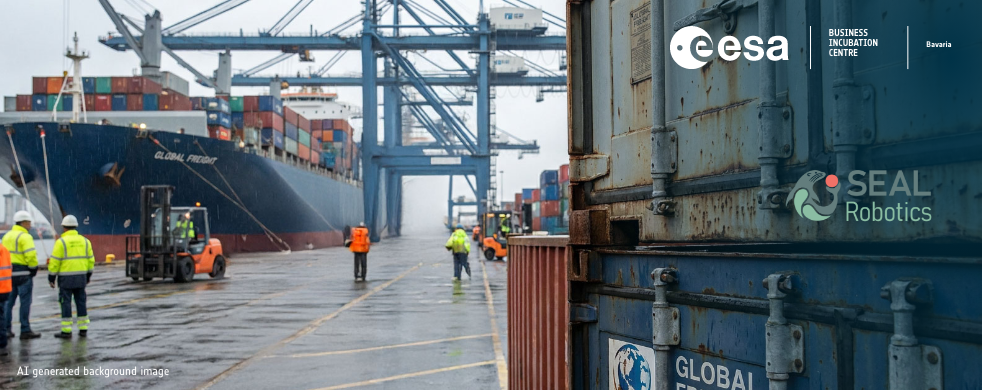
When Marie-Elisabeth Makohl joined a container voyage three years ago, she saw something that would later become the foundation of her company.
On board, she observed the complex process of securing containers on vessels. While many port operations are already highly automated, container securing itself is still done manually. Workers handle heavy components in demanding conditions, often exposed to harsh weather, moving equipment and repetitive tasks that leave room for human error.
For someone with a background in computer science and robotics, the conclusion was clear: this was exactly the kind of work robots should be doing.
“Why shouldn’t we have robots exactly where people are at risk doing their job?” she says. “That’s exactly the place where robots should operate.”
Today, Makohl is the founder of SEAL Robotics, a Munich-based startup developing robotic solutions for container securing processes. Recently selected for Forbes 30 Under 30 Europe 2026, she is building a company at the intersection of robotics, maritime logistics and industrial automation.
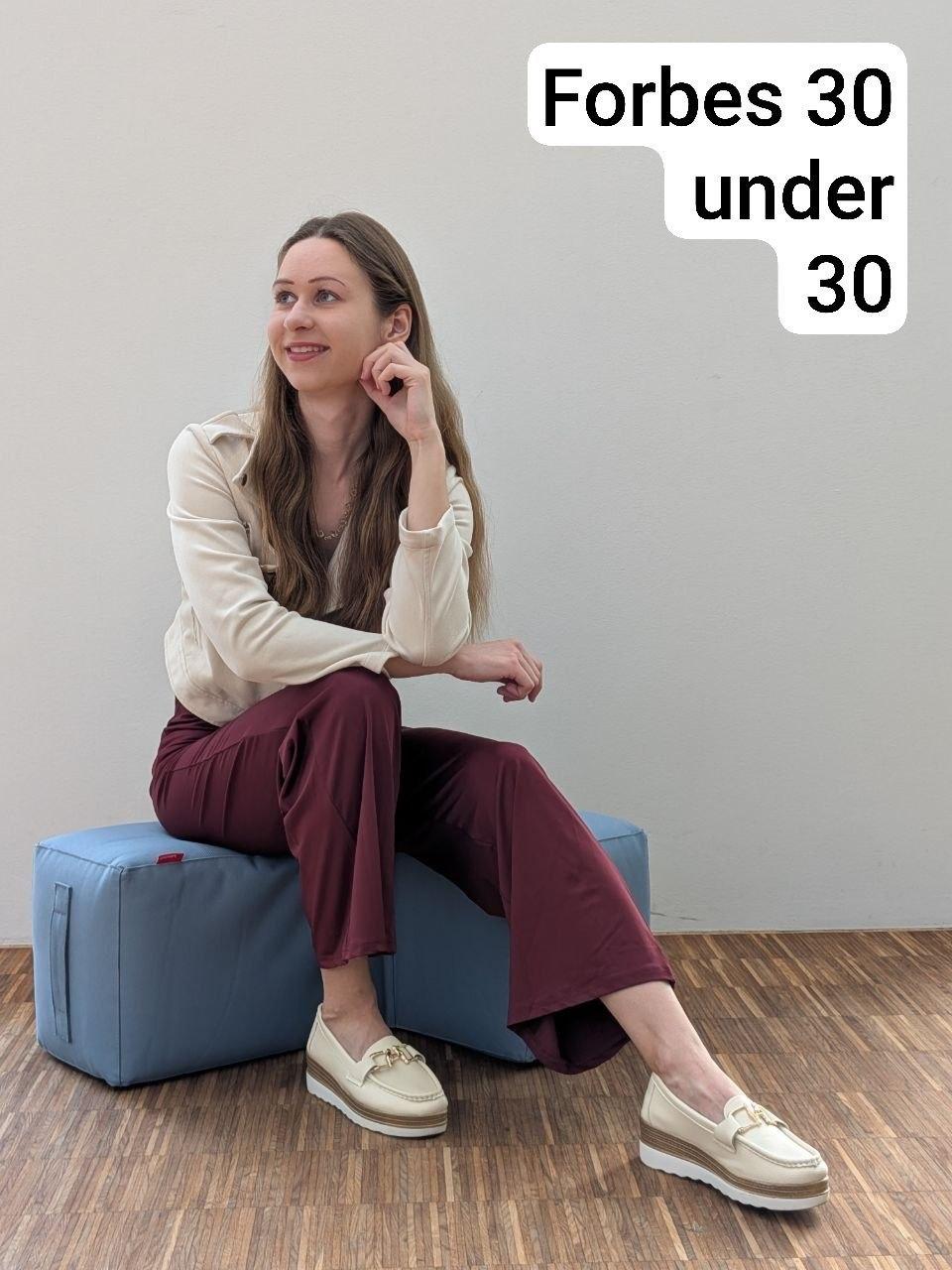
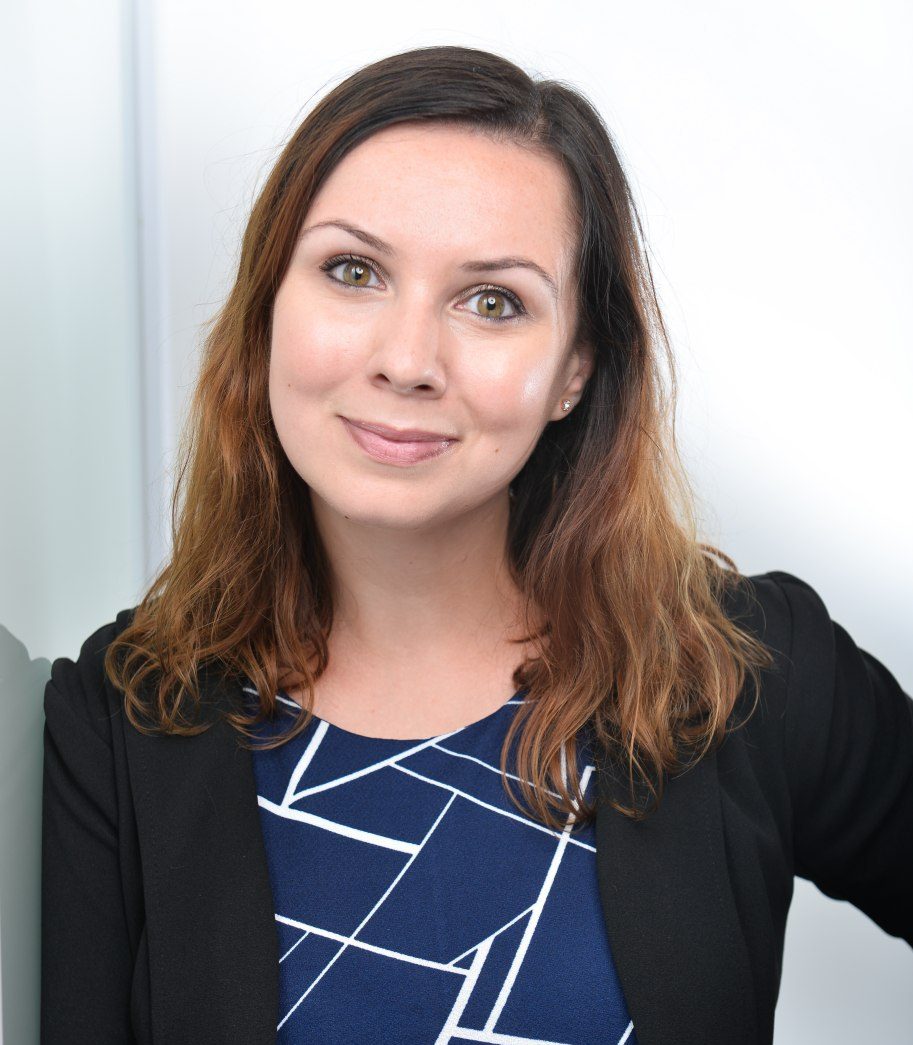
Image credit: Forbes. Used for editorial purposes.
The hidden manual work behind global shipping
From the outside, container terminals may look highly automated. Massive cranes move containers, automated guided vehicles transport cargo and digital systems coordinate complex logistics flows. But behind this image of efficiency, some critical processes remain surprisingly manual.
One of them is twist lock handling.
Twist locks are metal components used to secure containers. They are attached to the lower corner castings of containers before they are lifted onto vessels. Depending on the type of twist lock, workers may also need to close, open, remove or reposition them manually.
Even automated twist locks do not fully solve the problem. As Makohl explains, the automation often refers only to part of the mechanism. People are still needed to attach and remove the components.
The consequences of errors can be severe. If a container is lifted while still connected to another container below it, an entire stack can be affected. This creates safety risks, delays and potentially enormous costs for ports and shipping companies.
There is also a documentation gap. In many cases, terminal operators rely on verbal confirmation or signatures that the work has been done. But there is limited visibility into which twist lock was handled, where it was placed and how the process was completed.
SEAL Robotics aims to change that.
The company’s solution is designed to automate twist lock handling as well as pin handling. Pin handling refers to the process of securing containers on rail cars, where safety mechanisms on the wagons must be positioned correctly depending on the loading order and the different container sizes.
By automating and documenting these steps, SEAL Robotics gives ports and logistics operators a clearer record of operations, increases reliability and reduces the risk of costly interruptions.
Safety first, but not only safety
For Makohl personally, safety was the first driver.
“If you think about the weight of containers, how many tons are basically flying above your head while working on the vessel, it’s crazy that you still have people in between,” she says.
But from a business perspective, the value proposition goes beyond worker protection. Customers care about speed, reliability, documentation and throughput.
Makohl explains that the buying trigger can vary depending on the region. In Europe, return on investment can be linked to labor costs and safety improvements. In Asia, documentation and operational speed may be even more important. If a port can prove that every process was completed correctly and help a vessel leave a day earlier, that becomes a major competitive advantage.
“For me personally, it was safety,” she says. “From an economics point of view, it is much more about documentation, speed, increasing throughput and reliability.”
This combination of human and economic value is central to SEAL Robotics’ positioning. The company does not only aim to mitigate labor shortages. It also helps already highly automated ports close one of the remaining gaps in their operations: the manual securing of containers.
By automating this step, SEAL Robotics enables ports to move closer to fully automated processes, where container handling, securing and documentation can work together more reliably and efficiently.
Why robotics is the right answer
Makohl sees the problem as perfectly suited for robotics. Not because robotics is trendy, but because the task is physically demanding, repetitive, risky and operationally critical.
She also believes that a purely traditional engineering approach would not be flexible enough for the reality of port environments.
Every port is different. Twist locks are generally handled on the quay side, but the exact setup can vary significantly from terminal to terminal. In some ports, this happens directly on the quay. In others, twist lock handling takes place on a middle platform integrated into the ship-to-shore crane.
Some terminals also rely on automated guided vehicles or additional platforms connected to crane movements. As a result, infrastructure and workflows can differ widely across ports, which makes flexibility essential for any automation solution.
That is why SEAL Robotics is building a modular and adaptable solution.
“Modularity is important because you have a lot of different infrastructure in ports and a lot of different processes,” Makohl explains.
Rather than creating one rigid machine for one ideal terminal, the company is developing technology that can adapt to different operational setups. This flexibility is also important for SEAL Robotics’ long-term vision. Twist lock and pin handling are only the beginning.
“In the end, we want to be an embodied AI company for global port automation tasks,” Makohl says.
Building trust far from the sea
Launching a maritime logistics startup from Munich may seem unusual. Makohl is aware of that.
“We are a company from Munich, very far away from the sea,” she says. “People ask us how we know about maritime logistics.”
Her answer is simple: she had seen the problem firsthand. That practical exposure helped SEAL Robotics understand the realities of port operations from the beginning.
Being based in Munich also became more practical than it might seem at first. Located close to an international airport, the team can easily reach major ports around the world, making customer visits, pilots and industry conversations much more accessible.
That practical exposure helped SEAL Robotics earn credibility in a traditional industry. But Makohl also emphasizes that trust was built through consistent customer discovery.
From day one, the team focused not only on the technology, but also on speaking with customers, understanding decision makers and learning how the industry frames value. This helped the company avoid a common startup mistake: building advanced technology first and only later figuring out whether customers actually need it.
“We worked on getting to know our customers, getting to know the big decision makers and understanding their opinion about what we are doing,” she says.
For Makohl, this early industry engagement is one of the reasons SEAL Robotics is well positioned to move from technical development to commercial adoption.
From university to CEO
Makohl’s selection for Forbes 30 Under 30 Europe 2026 marks an important moment in her entrepreneurial journey. But what stands out most to her is not only the recognition itself. It is what the journey required.
She stepped out of university, started a company from scratch, built a team and grew into the role of CEO without having founded a company before.
“There is no university course that would be able to prepare you for that,” she says. “It is simply trial and error.”
She describes the transition as one that requires self-confidence, resilience and leadership. A founder must represent the company publicly, pitch the vision, build a culture and become a role model for the team, even while still learning.
For Makohl, this is part of what makes the journey meaningful: building not only a technology company, but also an environment where people can work in a friendly, respectful and ambitious way.
The next milestone: commercial readiness
SEAL Robotics recently raised pre-seed funding. The next goal is clear: prove that the solution is not only technically compelling, but commercially ready.
The company is currently running a pilot project in Northern Europe, which is still in the development and testing phase. Before raising the next round, Makohl wants to sell the solution and secure international contracts.
This will be a decisive step for the company. It is the move from promising technology to real-world operational adoption.
A future of remote-controlled and autonomous terminals
Looking ahead, Makohl sees ports becoming increasingly digital, automated and eventually autonomous.
The fully digitalized terminal of the future, in her view, will include far more than automated container securing. There are many additional tasks in ports that could be supported by robotics, from documentation to reading container numbers and integrating operational data into intelligent systems.
At first, the future port may be remote-controlled. In 10 to 20 years, it may become fully autonomous.
Where does SEAL Robotics fit into that future?
Makohl answers with founder-level ambition: “In the future, every robot in every port worldwide will be manufactured by SEAL Robotics.”
It is a bold vision. But it starts with a very concrete problem: making container securing safer, faster and more reliable.
In an industry where small process failures can create major operational consequences, SEAL Robotics is showing that the next wave of port automation may not begin with the most visible machines, but with the overlooked manual tasks that keep global logistics moving.